
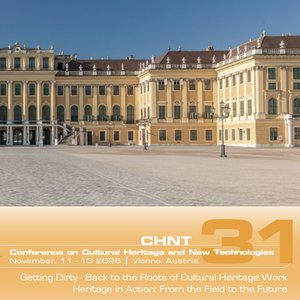
CHNT '31 goes under the title 'Getting Dirty – Back to the Roots of Cultural Heritage Work Heritage in Action: From the Field to the Future'
Cultural heritage is understood most clearly when encountered in the places where it originates: in the field, within historic structures, and across landscapes shaped by human activity. Archaeological and architectural research form the basis for interpreting these cultural environments, while World Heritage frameworks highlight established principles for long-term protection, management, and communication of both their tangible and intangible values.
Digital technologies—whether applied in surveying, documentation, analysis, or interpretive work—play a decisive role across the heritage field. Yet their true significance emerges not in controlled settings, but in real operational contexts, where dust, weather, material decay, human presence, and logistical constraints influence every choice. It is within this dynamic space—where scientific research, management responsibilities, and communication objectives intersect—that contemporary heritage practice takes shape.
CHNT31 brings these dimensions together by returning to the roots of cultural heritage practice.
We examine how digital methods perform under real-world conditions, how diverse areas of heritage research inform management strategies, expand our understanding of World Heritage, and support the meaningful communication of its values to varied audiences. At the same time, and in line with the broader UNESCO mission, the conference creates a forum to address human experience, participation, and ethical considerations—factors that shape how heritage is perceived, engaged with, and transmitted to future generations.
CHNT31 holistically addresses the diverse actors that shape the heritage field—researchers, digital specialists, practitioners, managers, and those who often combine several of these roles. Preserving the 30-year tradition of CHNT, the conference continues and strengthens a dialogue in which developing, testing, and refining digital methods is inseparable from their use in protecting, interpreting, and sustaining cultural heritage. It builds on an ongoing exchange where research responds to practical demands, and where real-world challenges stimulate new directions for investigation.
The conference invites researchers, practitioners, site managers, policy actors, students, and community representatives to jointly reflect on the shared responsibilities and opportunities that arise when scientific knowledge, digital innovation, and management practice intersect.
